Showing posts with label chinese diet therapy. Show all posts

Saturday, June 10, 2017

Cooking with herbs...Herbal beef strog

Cooking with Herbs – Herbal Beef Strog

This is my herbal version of a classic Russian dish. Herbal beef Strog switches out cream for yoghurt, and by adding some Chinese herbs and vegetable chowder to the dish is still rich and hearty but more healthier than it’s original.
Purpose in Chinese Medicine:
Tonfiy Blood and Yin
It's got some warming herbs (pepper) as well as blood building dang gui, beef and
Yoghurt can moisturize and help Yin...as well as Huang Qi which is great if you get a bit of dry skin in winter.

Perfect Season: WINTER

Chinese Herbs Used:
Huang Qi – Astragalus


  Dang Gui – Angelica Root


These 2 herbs are super easy to get in Asian grocery stores. You will need to grind the Huang Qi into a powder in a coffee grinder yourself. If you can't grind it up, you can use it in the same way as the Dang Gui and take out before serving, but you might need to add more cornflower at the thickening end of the recipies.
You have two options with cooking, both methods start out using the frypan.
  • cook in a fry pain – 30 mins cooking time
  • cook in slow cooker – 5-6hrs cooking time. – this is better if you have the time, the meat will be more tender, easier to digest. A much better cooking method for a depleted person. (Spleen Qi, Blood or Yang deficient person)

INGREDIENTS:
1 Onion – red or brown
4 pieces of garlic
9-12 button /normal mushrooms
½ cup Greek Yoghurt
2 beef steaks (about 600-800g beef)
olive oil or butter
400ml Chicken stock
3 tblsp cornflower
250ml thick vegetable chowder stock (home made – see recipe)
3 pieces Dang Gui
3 teaspoons powdered huang Qi
3 tablespoons Woostershire Sauce
Black pepper, ground (about 10 grinds)
10 sprig of parsley

  1. Dice onion and garlic. Sauté in Fry pan until browed    
  2. Cut beef into strips and add beef strips to onion and garlic mix. Cook until beef is browned. Remove from pan and set aside. 
  3. Wash and slice mushrooms. In fry pan, add a small amount of butter or oil and add sliced mushrooms, stirring until mushrooms are slightly browned.
    1. Use butter (if you have no dampness) or oil (have some dampness)

OPTION A: FRY PAN METHOD (Quicker)

  1. In mushroom pan, add woostershire sauce, stir through mushrooms.
  2. Add beef mixture
  3. Add vegetable chowder (can be added from frozen and defrost in pan as you go), chicken stock, about 10 grinds of black pepper, 8 sprigs of chopped parsley (use the other 2 for garnish) and Dang Gui pieces. Stir thoroughly on medium heat.
Adding the vege stock from frozen cup
beef, mushrooms and chicken stock mixture
Chicken stock...add about 400ml
  1. Mix through your powdered Huang Qi which will thicken the mixture slightly.
  2. Cover frypan with lid, and let mixture simmer on medium heat for around 20 minutes, stirring as needed (do not let stick to bottom).
  3. While this is cooking you can prepare and cook vegetables or pasta part of the stroganoff dish.
  4. After 20 minutes the meat will start to become tender, and your sauce will be full of flavour. Before the last step, you will need to stir the dish and remove the 4 pieces of dang gui. They will look much more soggy than before. If you can’t remove them, it is ok to eat the herb, but it will taste rather woody, so best to remove it before serving to your guests!
  5. The last part of the dish will be to thicken the mixture. Add 1 teaspoon at a time of heaped teaspoon cornflower and stir immediately. Around 3-4 teaspoons will be needed to thicken the mixture.
  1. Turn off stove and add around ½ cup of Greek yoghurt, this will thicken the mixture and turn it the classic stroganoff creamy colour.


OPTION B: Slow cooker option:

  1. Place mushroom mix and beef strips mix to your slow cooker.
  2. Turn slow cooker onto low heat
  3. Add woostershire sauce, vegetable chowder (can be added from frozen and defrost in pan as you go), chicken stock, about 10 grinds of black pepper, 8 sprigs of chopped parsley (use the other 2 for garnish) and Dang Gui pieces. Stir thoroughly.
  4. Mix through your powdered Huang Qi which will thicken the mixture slightly.
  5. Cover with lid and let simmer on low heat for 5-6 hours.
  6. After 5-6hrs, give the slow cooker mix a stir and and remove the 4 pieces of dang gui. They will look much more soggy than before. If you can’t find them to remove them, it is ok to eat the herb, but it will taste rather woody, so best to remove it before serving to your guests!
  7. The last part of the dish will be to thicken the mixture. How thick you want your stroganoff to be and how thick it already is will depend on how much cornflower you need to add. Add 1 teaspoon at a time of heaped teaspoon cornflower and stir immediately. Around 3-4 teaspoons will be needed to thicken the mixture.
  8. Turn off the slow cooker, and add around ½ cup of Greek yoghurt, this will thicken the mixture and turn it the classic stroganoff creamy colour.

Beef Stroganoff can be served in a number of ways. It is generally to rich to eat by itself, but can be served as a pasta sauce, with rice or with steamed vegetables or vegetable past (made from zucchini, squash and carrot etc)

RECIPIE IS COPYWRIGHT MARIE HOPKINSON 2017. Reproduce only with express permission 

Tuesday, March 1, 2016

Autumn Recipies - Huang Qi Hotpot

This simple, Autumn Huang Qi Hotpot can be made as a soup or chowder-type casserole dish and can transition the body through the Autumn to winter seasons. Also It’s Paleo, Vegetarian and Vegan friendly, and gluten free.  
Season: Autumn, Winter
Flavours: Sweet
Element: EARTH
Purpose: Nourish the Spleen and Stomach,
Can be modified for Liver Energy (Qi) Stagnation, Dampness and Blood Deficency (xu).
Cooking style: slow cooking – moistening.
Prep Time: 15-20mins
Cooking Time: 3 to 8 hours in slow cooker.

The Sweet herb of Huang Qi (Astragalus) is a tonic to the Earth Element – the Spleen and Stomach Organs. Here, I’ve combined it with another similar herb that can be used in cooking called Dang Shen or Codonopsis. Dang Shen is similar to (Ren Shen) Ginseing, but much cheaper which makes it suitable for cooking. These two herbs are a tonic to the Spleen organ / Earth Element and are moisturising to your body which is great for the season of Autumn (associated with Dryness). Because these herbs are essentially bits of wood, you don’t want to eat them, so you can pick out of the mixture before serving or place in a muslin bag during the cooking process.

INGREDIENTS:
Root vegetables:
1 Sweet potato
1 small or half a big purple sweet potato
2-3 carrots*
1 onion, or purple onion*
1 small turnip*
1 small parsnip*
*alternately, buy a “soup pack” of veges from the fruit and vege store and use that plus the sweet potatoes.

METHOD.
Cut all vegies into chunks and place into the slow cooker.
2) Add a handful of Dang Shen and 3 strips of Huang Qi
3) cover with water, so water is almost covering the vegetables. Ensure the dry herbs are fully immersed in the water
4) Place on low heat overnight (for 6-8 hours) or high heat for 3-4 hours until vegetables are cooked.
5) Remove bits of Huang Qi and Dang Shen before eating.

Modifications:
Without moderation, this food is a bland, spleen tonic, It’s not intended to be too flavoursome. It’s perfect for someone who has the weak spleen energy or earth element. There is a little bit of pungent flavour coming from the onion and
For more flavour, ½ to 1 cup of chicken stock can be added and the same amount of water removed.

  • For deficiency of WOOD ELEMENT or Blood (Xue), add the chicken stock as above and change the carrots to purple carrots if available.
  • For Dampness, take out 1 of the sweet potatoes and add ½ cup of barley.
  • For (Liver) Qi Stagnation, add more pungent flavours, Upon serving whilst piping hot, add fresh coriander and/or lots of fresh spring onions.

Marie Hopkinson, Metro Health and Medicine©

Thursday, August 20, 2015

How Can Chinese Medicine Help Me Live A Better Life?

Chinese medicine is founded on major prevention and health promoting principals:
  • It’s the practitioners job to keep you healthy, rather than just focus on the health problem you have now
  • Chinese medicine sees more inter-connections in the body than mainstream medicine (biomedicine or western medicine). A practitioner looks for how
  • Chinese medicine follows ancient wisdom from practitioners who are tried, tested and true…there is thousand years old literature which was just as useful back then as it has been in the centuries proceeding. Practitioners today have the benefit of centuries of clinical practice to see time and time again the outworking of acupuncture and herbal medicine formulas.
  • Chinese medicine promotes lifestyle and diet changes first, then use treatment (herbs and/or acupuncture)
Famous doctor from the Tang Dynasty, Sun Si Miao said “Dietary therapy should be the first step when one treats a disease. Only when this is unsuccessful should one try medicine”
Diet therapy is actually very easy to apply and it makes a lot of sense when you understand the why behind the what. Chinese medicine is based on observing our body’s interaction with nature and the enviornment we live in, so it is lodgical.
Marie’s practice centers around optimising patients health via diet and lifestyle. Increasing health by optimising your digestion helps you to recover quicker from illness (colds, flus and viruses etc), helps your body to perform at it’s best, promotes good mental health, helps you look better as you grow older and increase your stamina to last longer and be more resillent in stressful times.
As Hippocrates said “let food be thy medicine”

Monday, August 17, 2015

Could you use more Energy?

Energy is a central focus of Chinese Medicine. In the clinic it’s common to hear people say they feel tired, or even just that they could use some more energy. Energy is called Qi (pronounced Chee) in Chinese medicine. Although Qi is more than the ideas that the English word Energy contains. Its a lifeforce, the force which provides movement, flow, and at the same time nourishment to the body.
Qi is more of a Yang quality. There are more than 10 different kinds of Qi in the body – Defensive Qi – or the energy that protects us from getting sick from exposure to external pathogens, is just one example. Food Qi, know as Gu Qi is another.

How do we make Qi? Food and Air are the two main ingredients. We can breathe in Qi. This is why breathing is so important and exercise therapies in Oriental cultures are centered around breathing (Qi Gong, Yoga, Tai Chi etc).

The second way to make Qi is from food. “Gu Qi” literally means “food Qi” – which is the energy our bodies get from nutrients extracted from our diet.
Making energy essentially depends on 2 things:
1) The source – having fresh air and nutrient appropriate food to begin with
2) The machine – Our body is essentially a machine to make energy. The bodies ability to process the air – the techniques we use to breathe, our posture, our habits and the bodies digestion are essential to extracting good Gu Qi from food and fluids. If you tune up your car to make it run better, doesn’t it makes sense to tune up your body from time to time?
Chinese Medicine practitioners are very concerned with your digestion as it’s the essential way for the body to make the energy it needs to heal itself. Even if you’ve come in with a sprained ankle or a headache, good digestion is important to the long term healing of your body.
Practitioners will often ask about bowel movements, appetite and the in’s and out’s of what you eat on a regular basis.
Good digestion means you will recover quicker from injury, react better to stressful and unforeseen events and generally be able to eat a wide variety of foods without too many side effects.

If you experience bloating, gas, diarrhoea or loose stools or constipation (not going every day) on a frequent/normal basis then your body could probably do with a tune up.
When you have acupuncture, there are many ways an acupuncturist can “boost your energy”. One common way is throught strengthening the organs in the processes above – the Spleen and Stomach are central to healthy diegestion. The Lungs are essential to breathing and getting Air Qi into into your body.
THIS ARTICLE IS WRITTEN BY CHINESE MEDICINE PRACTITIONER MARIE HOPKINSON. THERE ARE MORE ARTICLES ON MARIE’S BLOG ABOUT WHAT TO EAT TO OPTIMISE YOUR DIGESTION ACCORDING TO CHINESE MEDICINE.

Friday, March 27, 2015

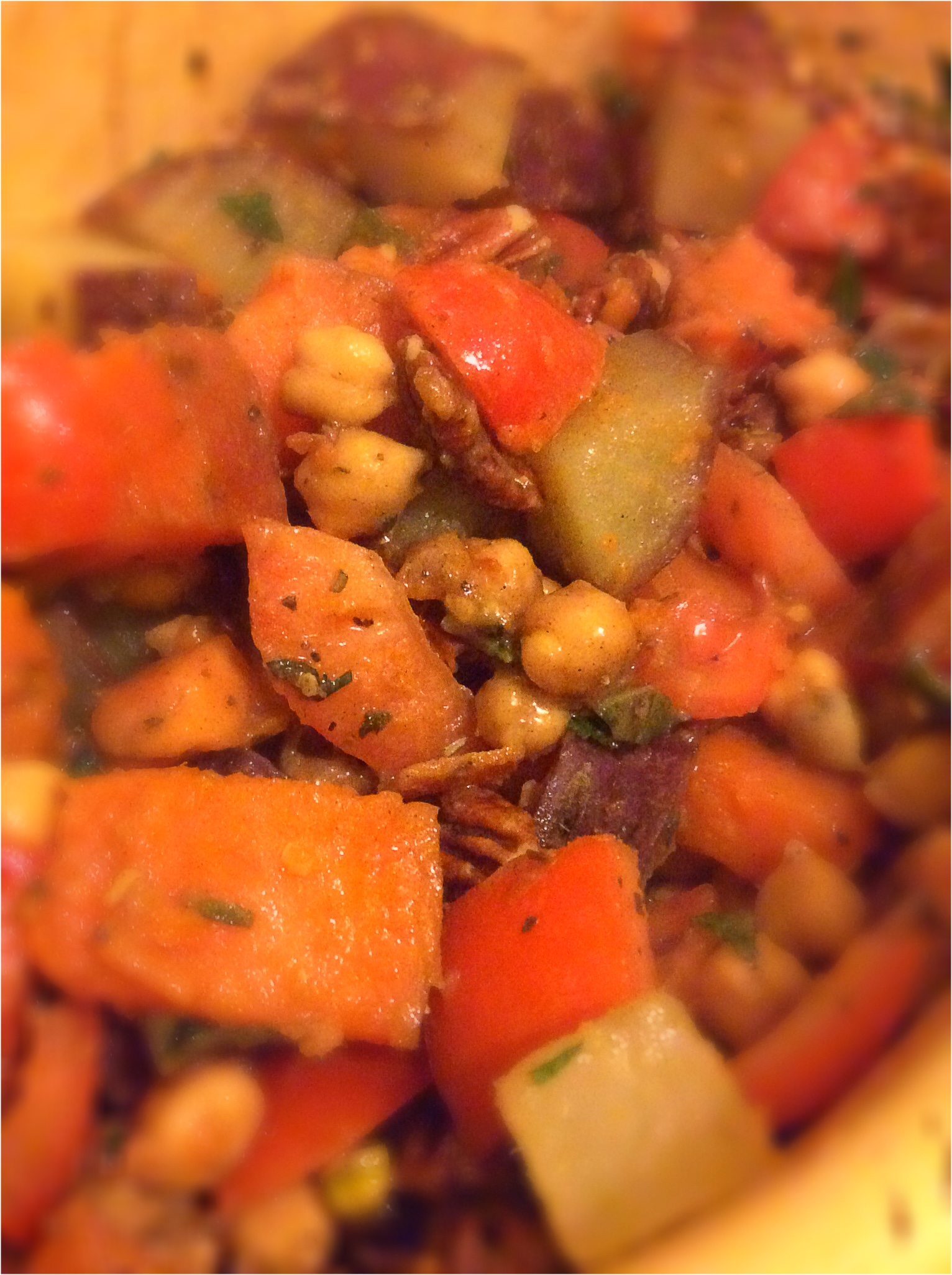
Healing Vegitarian Paleo Salad

This salad is an unusual mix with a really delicious taste, and only takes 15-20 minutes to prepare.

THIS RECIPE IS VEGETARIAN, PALEO Diet Friendly Options, GLUTEN-FREE, and HEALTHY in a CHINESE MEDICINE sense. IT CAN NOURISH SPLEEN QI, NOURISH YIN and mildly CLEAR HEAT. Combines cooked and raw, eaten Warm.
IMG_7480
I created this recipe with a friend who was post-surgery recovery in mind, to aid warding off potential infections. Both Hyssop and Mint have heat clearing functions. Hyssop has historical use dating back to the Bible, where it is often referred to in ceremonial cleaning and cleansing people of infections diseases.
INGREDIENTS:
1 can chick peas
1 purple sweet potato
1 regular sweet potato
~1/4 cup pecan nuts
~1/8 cup pistachio nuts, un-shelled.
4 tomatoes
sprig of fresh hyssop
sprig of fresh mint
Pepper or lemon pepper
METHOD: 
1) Cut up one large sweet potato (or two small sweet potatoes, I like to use half white/purple one and half the regular orange sweet potato), boil in pot on the stove until soft - 10 - 15 minutes.
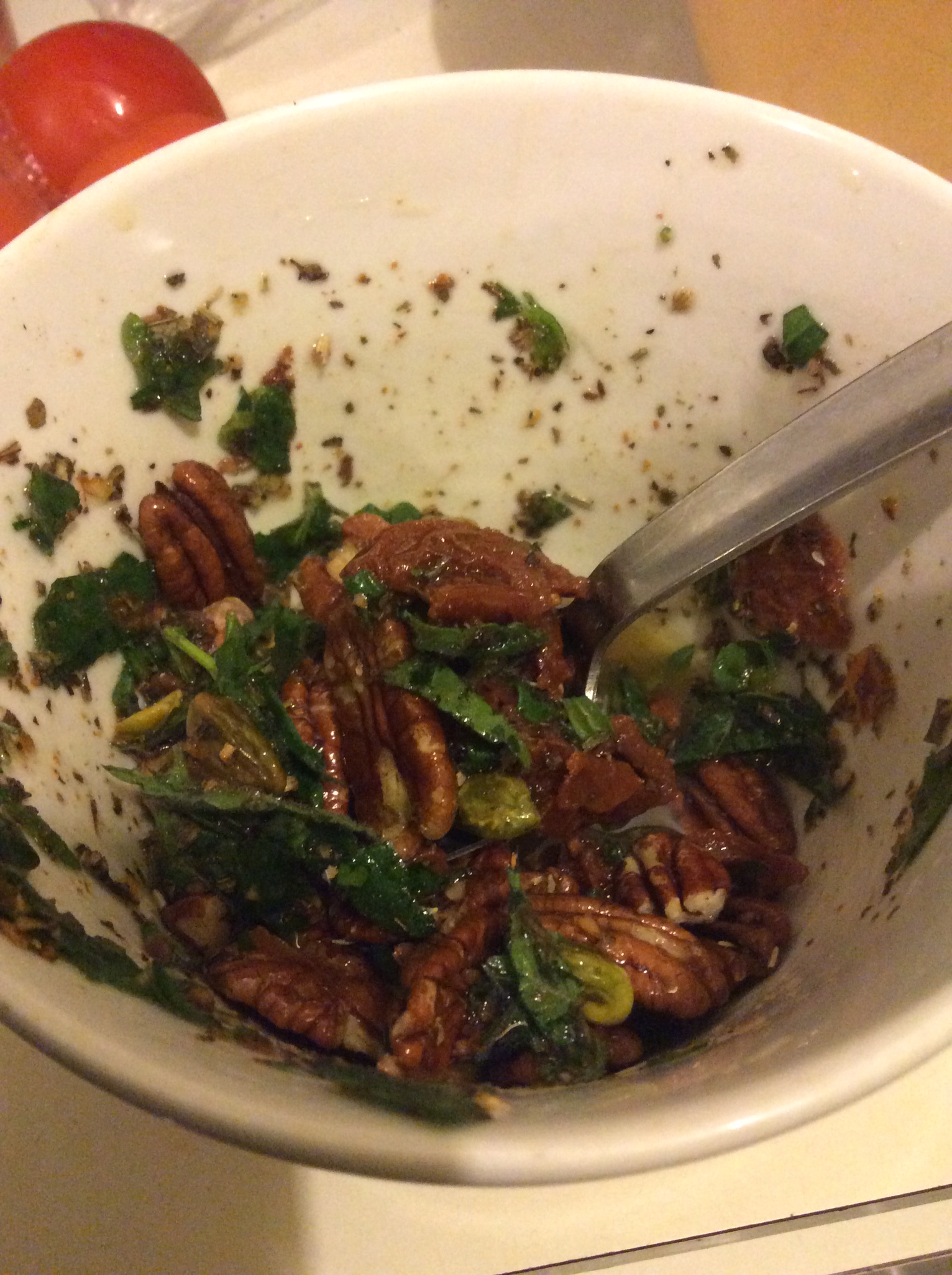
2) Prepare the salad dressing
  • Finely chop one sprig of fresh Hyssop and 1 large sprig of fresh mint.
  • Add a generous amount of extra virgin olive oil (about 30-50ml)
  • Add a large handful of pecan nuts and 2 teaspoons of un-shelled pistachio nuts
  • Grind some pepper or lemon-pepper into the salad dressing mix.
IMG_7436
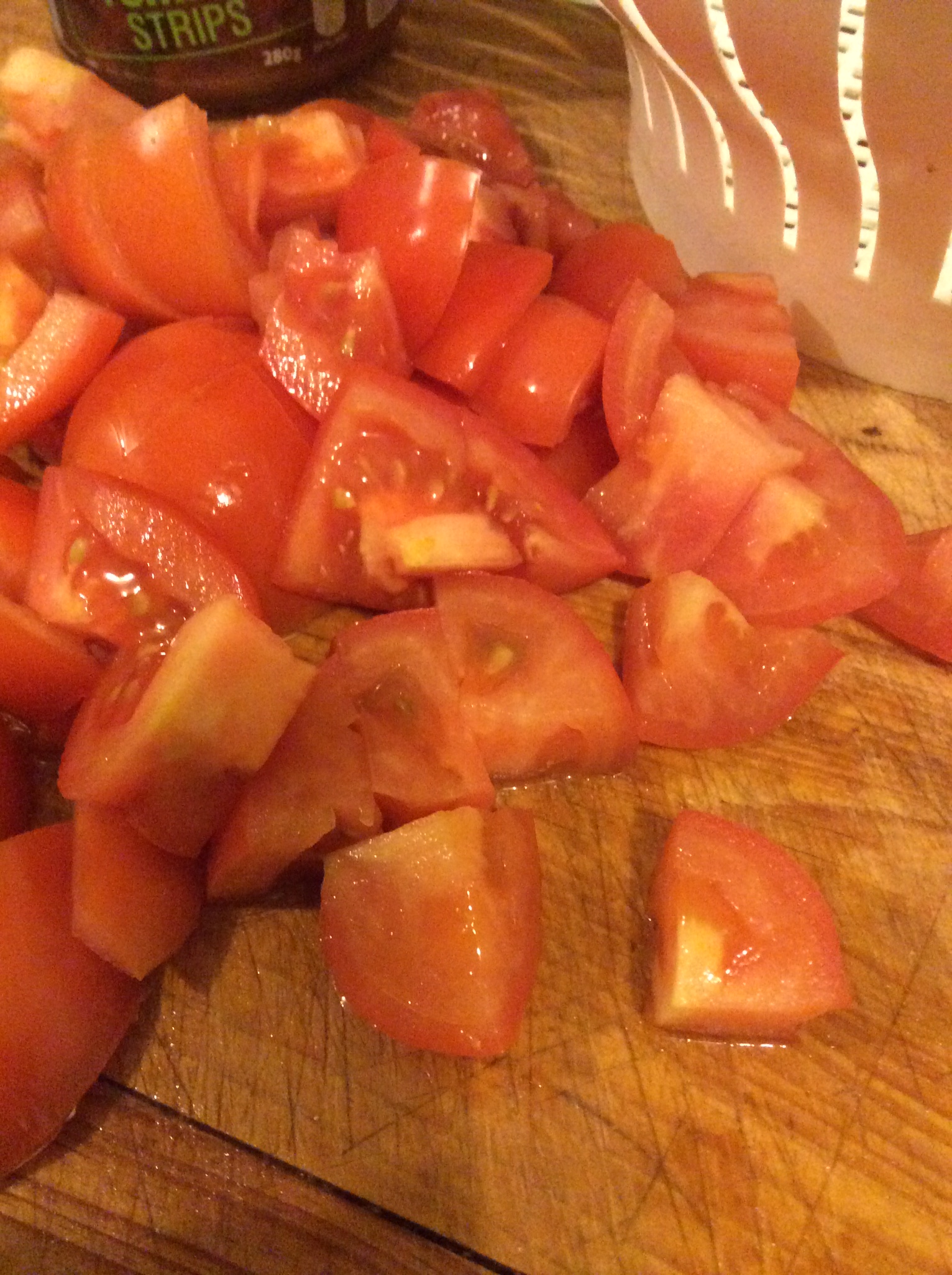
3) Cut up tomatoes, and any additional variation ingredients
IMG_7440
4) Combine Tomatoes (and any additions) with 1 can of chick peas (drained) in a large, heat proof bowl.
5) once cooked potatoes are soft (but not mushy) remove from heat, strain water from them set aside in strainer ready to add at the very end.
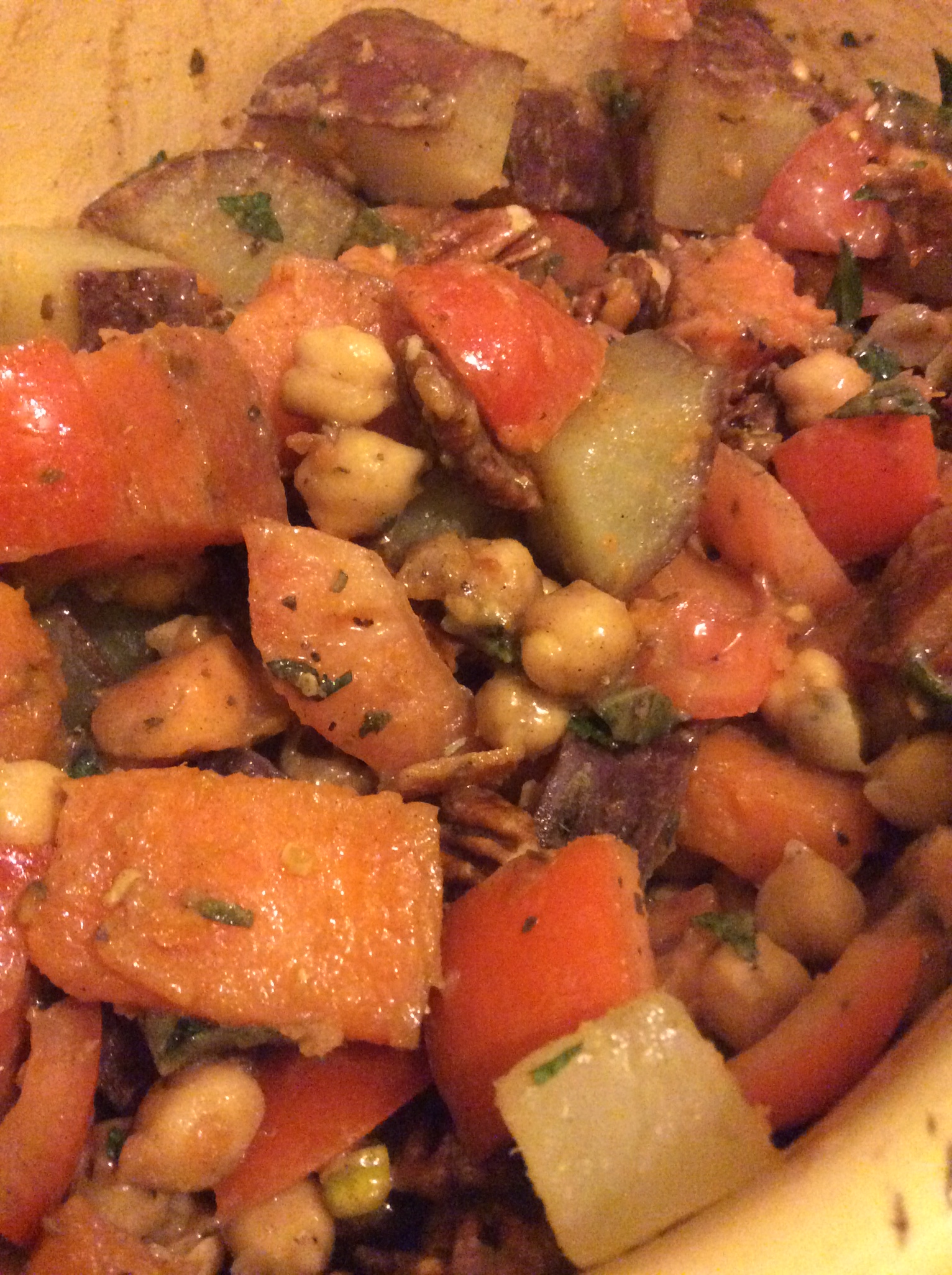
6) Pour salad dressing mixture over the ingredients, stirring thoroughly,  then add potatoes and stir the mixture around carefully to ensure all combined but potatoes don't go mushy.
IMG_7438
VARIATION INGREDIENTS:
1/2 Purple onion - Moves Qi (chee or energy) for Liver Qi Stagnation
PALEO DIET OPTION - Remove Chick Peas and increase cooked Vegitables, adding variety from Purple carrot, carrot or pumpkin. Baby Spinach leaves can be added just before serving.

Monday, September 8, 2014

Sugar Free September - tips for success

Before I even heard of #sugarfreeseptember, 4 weeks ago I went sugar free as part of returning to the Paleo diet. Depending on your health concerns, weight loss needs you can cut out just refined sugar through to anything of the overly sweet nature including things like honey.

Going sugar free can be tough in the first few days, but rest assured your body will thank you. After a week you shouldn't feel any where near as much craving for sugar, but many people return to it because of boredom, or lack of suitable alternatives.

In Chinese medicine, the sweet flavour easily overwhelmes the Spleen energy - the core of our body's energy-making machine. A small amount of sweet helps the Spleen - in the form of sweet vegitables or moderate amounts of grains the body can best benefit from the sweet flavour.

While Chinese medicine advocates cooked over raw foods, the following raw nutty recipie is definatley better than a chocolate bar or cupcake.

I love recipies that are quick to prepare, so over the next month, I'll share my personal favourites for your successful sugar-free September:

Tasty Nut Bars 

Your food processer or blender will become your best buddy in the kitchen, I like to keep a big box of a variety of nuts (all are good except cashews and peanuts), dried fruits and seeds (like sesame seeds, pepitas etc).

When you don't have time for reading recipies, just get a whole bunch of nuts and seeds and blend them down. Using a ratio of around 4:1, (nuts to dried fruit), add your favourite dired fruits to the blender. I like figs, seedless prunes, and a few apricots. If your not too concerned with loosing weight you can add a dash of some sugar-free sweet alternative like Dark Aglave Syrup, 100% pure Maple syrup or honey. when the mixture begins to "ball up" in the food processor then it's a good consistency.

For less sweet flavour, melt a few spoons of coconut oil and add that instead of the syrup options above.

Next, line a metal tin or plastic container with greeseproof paper and press the mixture into the tin, flattening it out.

For variety, each time you make the nut bars you can change up the kinds of nuts you use, or add some carob powder, cacao powder or cocoa powder.

Another option is to roll the mix into little balls and then roll in dried coconut.

Pop your nut bar into the fridge, after about an hour it's ready to cut up and eat.

Having these nut bars or balls in the fridge is a great sugar free snack alternative to chocolates and lollies. It's particularly handy in the first week of cutting out sugar when the cravings and habits are harder to break.  I like to cut mine up and put into zippy bags to take with me so I'm not tempted at work or on the run.

Good luck on your health journey this month with Sugar Free September!

Friday, July 11, 2014

Winter


Winter

Seasons are a major aspect of Chinese medicine, they influence the ways in which we should live, and the kinds of illnesses that are prevalent in the various seasons. Winter is the season where things retreat, hibernate and rejuvenate. Just as the weather becomes cold, and nature retreats, our lifestyle should also change to suit the climate. 

I took this photo on one of my trips to the tea village in Changsha
Wearing warm clothing, avoiding the wind and protecting the lower back (which is known as the “kidneys house”) is an important way to maintain health. Kidney energy relates specifically to winter via the Water Element. Water is reflected in tranquillity, stillness, rejuvenation and gestation. It’s the Kidney energy that is directly influential in reproduction and fertility. Water energy accumulates in hibernation and rest, this should be encouraged during Winter with longer sleep time (go to bed later and get up later), resting during the day by lying down flat after lunch for about 20 minutes, and sweating less by engaging in non-sweat producing exercises like stretching and gentle walking. 

Generally winter is the season where we don’t need to do much exercise. Certainly opening the pores during sweating creates an easy-access path for External Pathogens like Wind-Cold to invade and cause colds and flu’s.

The primary focus of winter is to allow the body to rest, sleep and recover from any cold and flu’s, and avoid exposure to External pathogens. For healthy people, winter should be a season of storing up the nourishing Post-natal Kidney Essence (Jing).