Showing posts with label perth acupuncturist. Show all posts

Thursday, August 20, 2015

How Can Chinese Medicine Help Me Live A Better Life?

Chinese medicine is founded on major prevention and health promoting principals:
  • It’s the practitioners job to keep you healthy, rather than just focus on the health problem you have now
  • Chinese medicine sees more inter-connections in the body than mainstream medicine (biomedicine or western medicine). A practitioner looks for how
  • Chinese medicine follows ancient wisdom from practitioners who are tried, tested and true…there is thousand years old literature which was just as useful back then as it has been in the centuries proceeding. Practitioners today have the benefit of centuries of clinical practice to see time and time again the outworking of acupuncture and herbal medicine formulas.
  • Chinese medicine promotes lifestyle and diet changes first, then use treatment (herbs and/or acupuncture)
Famous doctor from the Tang Dynasty, Sun Si Miao said “Dietary therapy should be the first step when one treats a disease. Only when this is unsuccessful should one try medicine”
Diet therapy is actually very easy to apply and it makes a lot of sense when you understand the why behind the what. Chinese medicine is based on observing our body’s interaction with nature and the enviornment we live in, so it is lodgical.
Marie’s practice centers around optimising patients health via diet and lifestyle. Increasing health by optimising your digestion helps you to recover quicker from illness (colds, flus and viruses etc), helps your body to perform at it’s best, promotes good mental health, helps you look better as you grow older and increase your stamina to last longer and be more resillent in stressful times.
As Hippocrates said “let food be thy medicine”

Monday, August 17, 2015

Could you use more Energy?

Energy is a central focus of Chinese Medicine. In the clinic it’s common to hear people say they feel tired, or even just that they could use some more energy. Energy is called Qi (pronounced Chee) in Chinese medicine. Although Qi is more than the ideas that the English word Energy contains. Its a lifeforce, the force which provides movement, flow, and at the same time nourishment to the body.
Qi is more of a Yang quality. There are more than 10 different kinds of Qi in the body – Defensive Qi – or the energy that protects us from getting sick from exposure to external pathogens, is just one example. Food Qi, know as Gu Qi is another.

How do we make Qi? Food and Air are the two main ingredients. We can breathe in Qi. This is why breathing is so important and exercise therapies in Oriental cultures are centered around breathing (Qi Gong, Yoga, Tai Chi etc).

The second way to make Qi is from food. “Gu Qi” literally means “food Qi” – which is the energy our bodies get from nutrients extracted from our diet.
Making energy essentially depends on 2 things:
1) The source – having fresh air and nutrient appropriate food to begin with
2) The machine – Our body is essentially a machine to make energy. The bodies ability to process the air – the techniques we use to breathe, our posture, our habits and the bodies digestion are essential to extracting good Gu Qi from food and fluids. If you tune up your car to make it run better, doesn’t it makes sense to tune up your body from time to time?
Chinese Medicine practitioners are very concerned with your digestion as it’s the essential way for the body to make the energy it needs to heal itself. Even if you’ve come in with a sprained ankle or a headache, good digestion is important to the long term healing of your body.
Practitioners will often ask about bowel movements, appetite and the in’s and out’s of what you eat on a regular basis.
Good digestion means you will recover quicker from injury, react better to stressful and unforeseen events and generally be able to eat a wide variety of foods without too many side effects.

If you experience bloating, gas, diarrhoea or loose stools or constipation (not going every day) on a frequent/normal basis then your body could probably do with a tune up.
When you have acupuncture, there are many ways an acupuncturist can “boost your energy”. One common way is throught strengthening the organs in the processes above – the Spleen and Stomach are central to healthy diegestion. The Lungs are essential to breathing and getting Air Qi into into your body.
THIS ARTICLE IS WRITTEN BY CHINESE MEDICINE PRACTITIONER MARIE HOPKINSON. THERE ARE MORE ARTICLES ON MARIE’S BLOG ABOUT WHAT TO EAT TO OPTIMISE YOUR DIGESTION ACCORDING TO CHINESE MEDICINE.

Friday, March 27, 2015

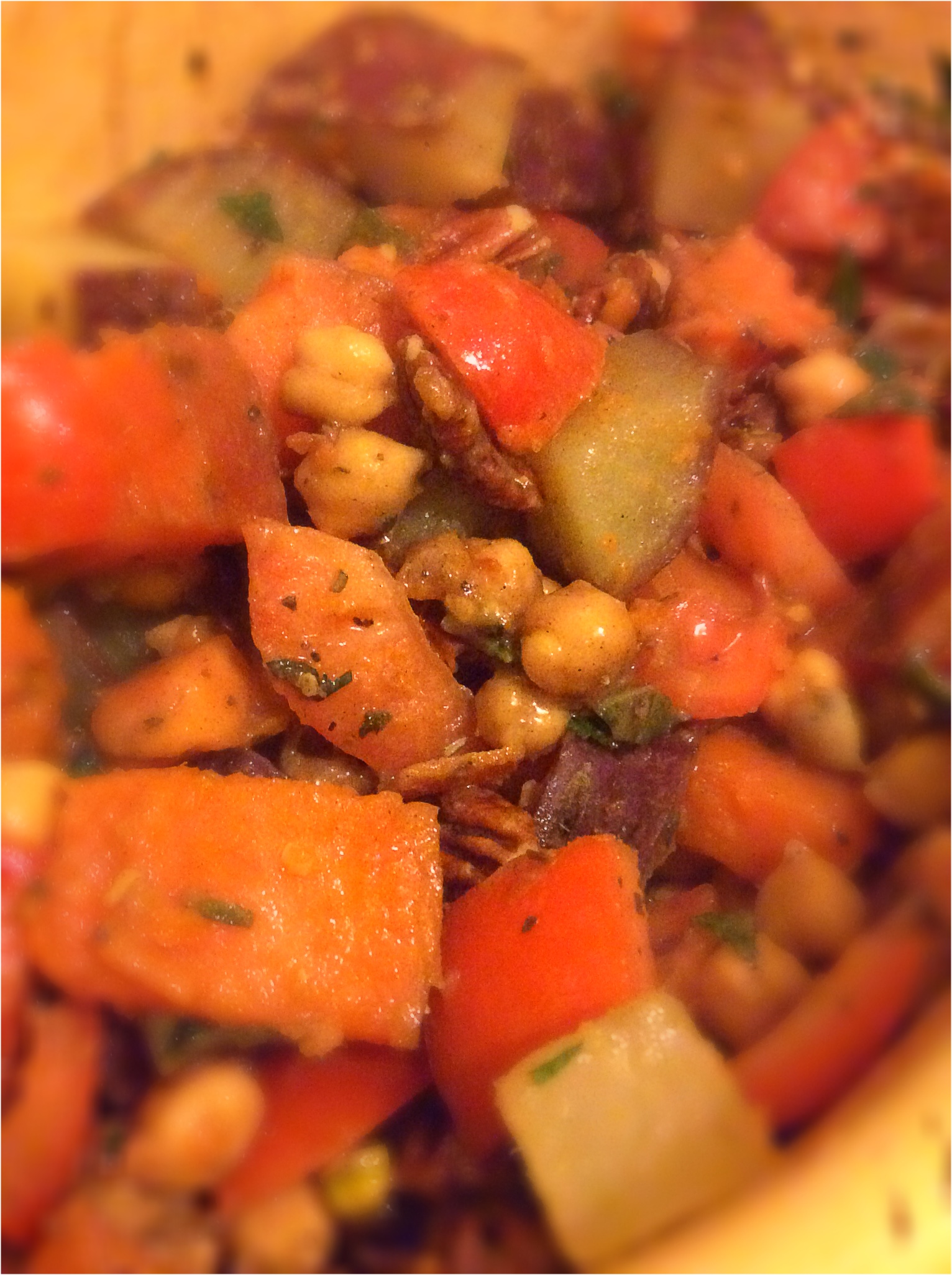
Healing Vegitarian Paleo Salad

This salad is an unusual mix with a really delicious taste, and only takes 15-20 minutes to prepare.

THIS RECIPE IS VEGETARIAN, PALEO Diet Friendly Options, GLUTEN-FREE, and HEALTHY in a CHINESE MEDICINE sense. IT CAN NOURISH SPLEEN QI, NOURISH YIN and mildly CLEAR HEAT. Combines cooked and raw, eaten Warm.
IMG_7480
I created this recipe with a friend who was post-surgery recovery in mind, to aid warding off potential infections. Both Hyssop and Mint have heat clearing functions. Hyssop has historical use dating back to the Bible, where it is often referred to in ceremonial cleaning and cleansing people of infections diseases.
INGREDIENTS:
1 can chick peas
1 purple sweet potato
1 regular sweet potato
~1/4 cup pecan nuts
~1/8 cup pistachio nuts, un-shelled.
4 tomatoes
sprig of fresh hyssop
sprig of fresh mint
Pepper or lemon pepper
METHOD: 
1) Cut up one large sweet potato (or two small sweet potatoes, I like to use half white/purple one and half the regular orange sweet potato), boil in pot on the stove until soft - 10 - 15 minutes.
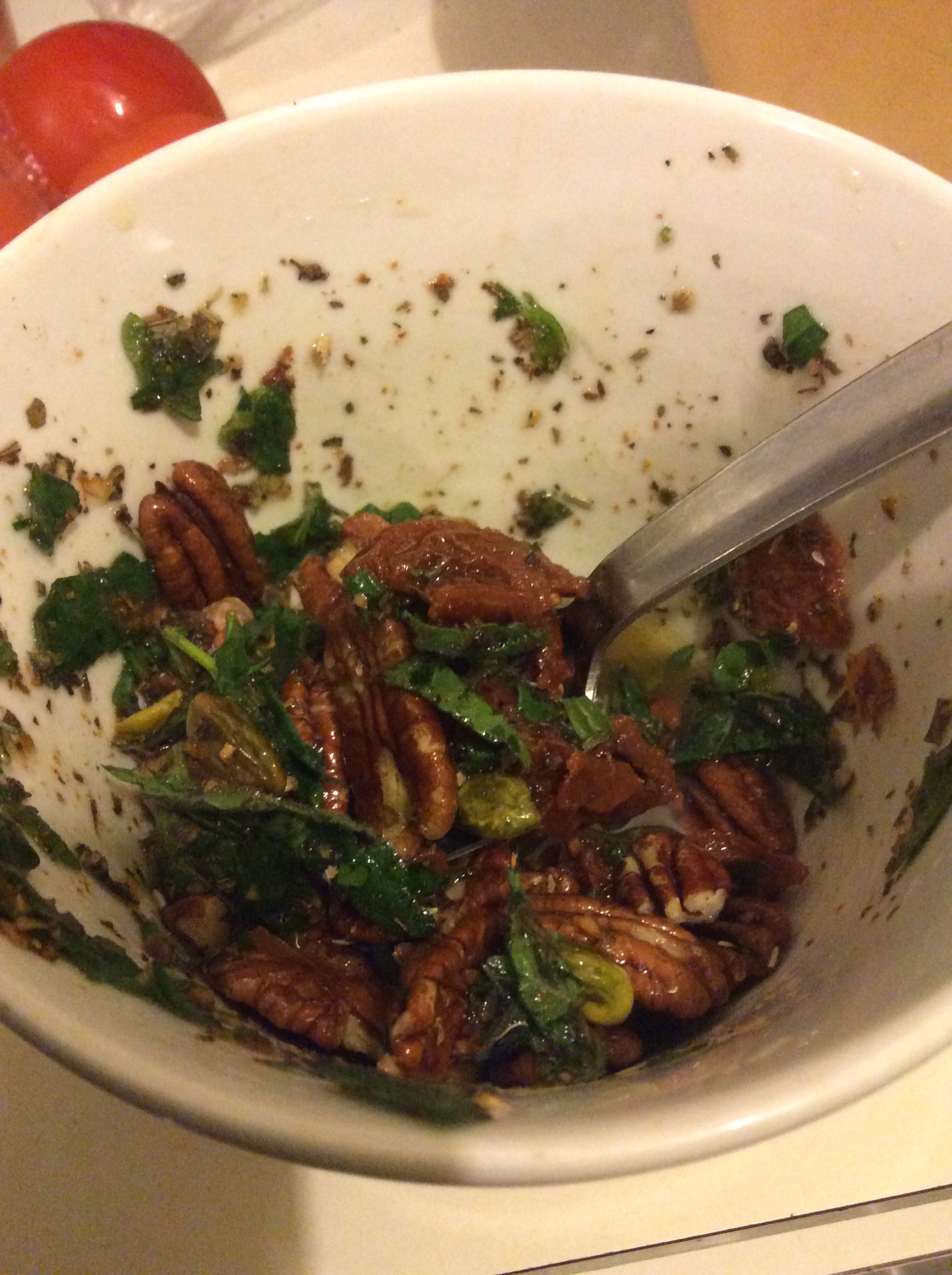
2) Prepare the salad dressing
  • Finely chop one sprig of fresh Hyssop and 1 large sprig of fresh mint.
  • Add a generous amount of extra virgin olive oil (about 30-50ml)
  • Add a large handful of pecan nuts and 2 teaspoons of un-shelled pistachio nuts
  • Grind some pepper or lemon-pepper into the salad dressing mix.
IMG_7436
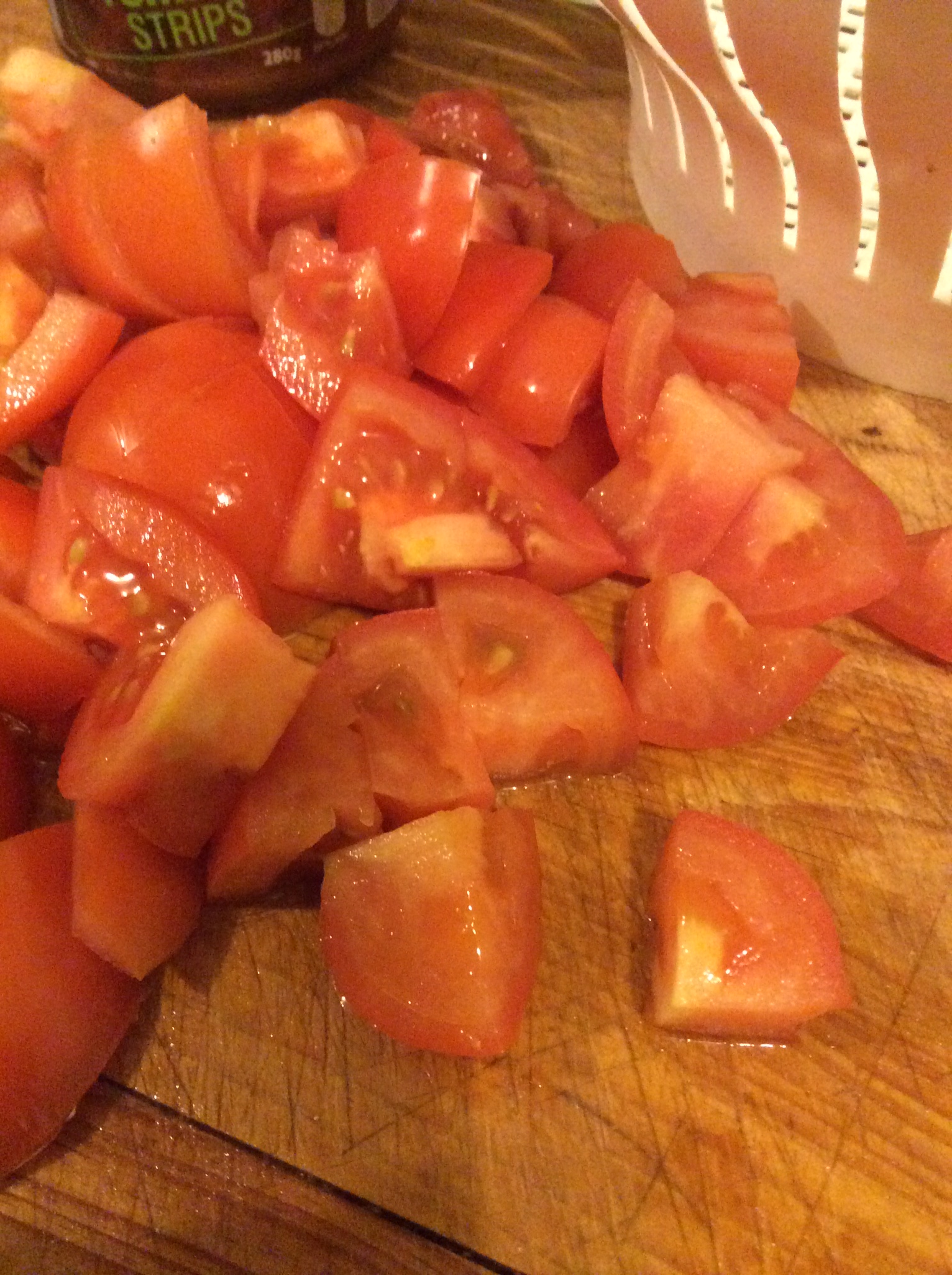
3) Cut up tomatoes, and any additional variation ingredients
IMG_7440
4) Combine Tomatoes (and any additions) with 1 can of chick peas (drained) in a large, heat proof bowl.
5) once cooked potatoes are soft (but not mushy) remove from heat, strain water from them set aside in strainer ready to add at the very end.
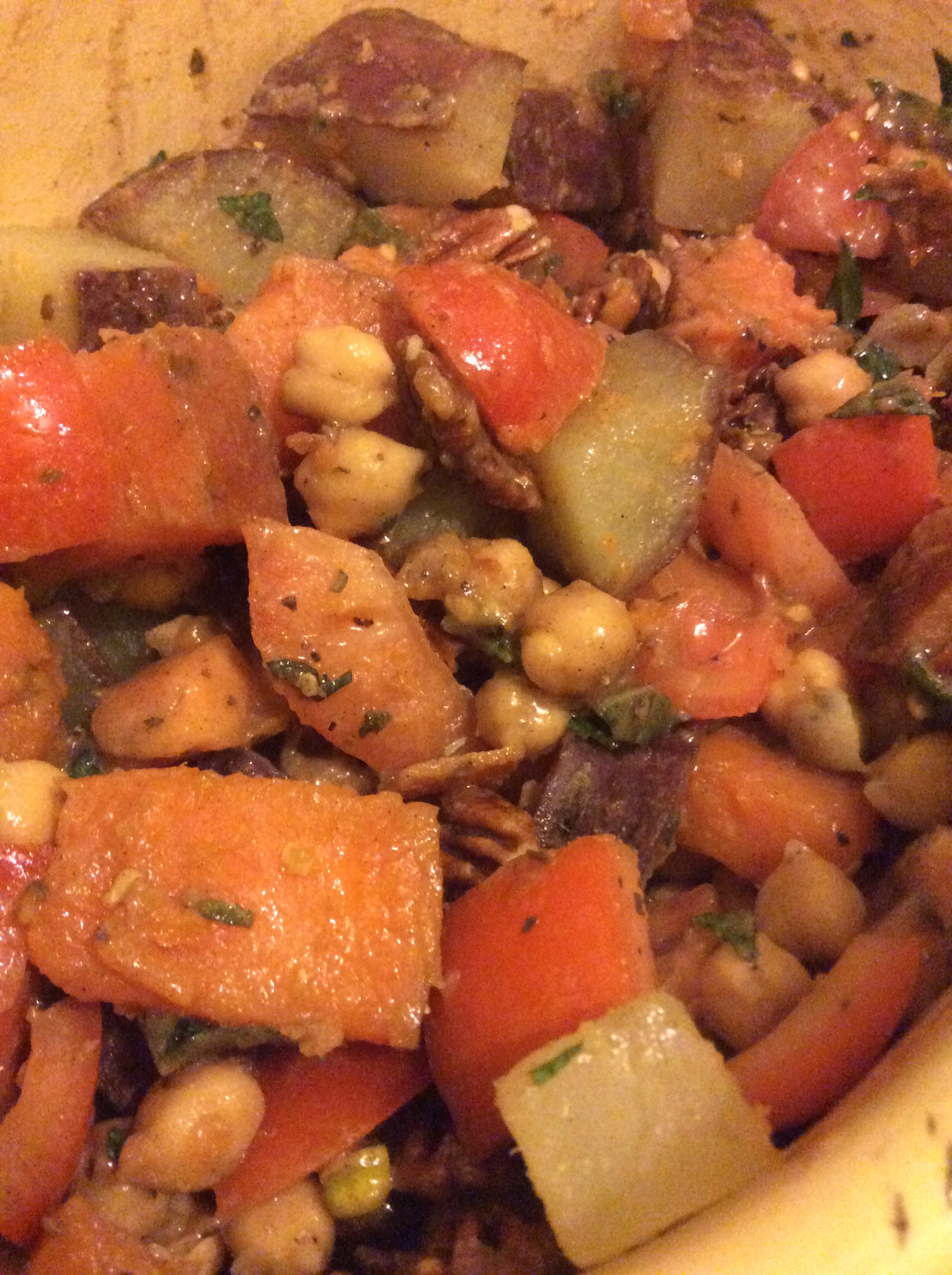
6) Pour salad dressing mixture over the ingredients, stirring thoroughly,  then add potatoes and stir the mixture around carefully to ensure all combined but potatoes don't go mushy.
IMG_7438
VARIATION INGREDIENTS:
1/2 Purple onion - Moves Qi (chee or energy) for Liver Qi Stagnation
PALEO DIET OPTION - Remove Chick Peas and increase cooked Vegitables, adding variety from Purple carrot, carrot or pumpkin. Baby Spinach leaves can be added just before serving.

Tuesday, September 3, 2013

Check out Marie's new Chinese Medicine Podcast...

Episode 4: Does Acupuncture hurt?


Answering the common question, "Does acupuncture hurt?", or what does acupuncture feel like? is Marie Hopkinson, Board Registered Chinese medicine practitioner from Perth Western Australia. Marie has been in clinical practice F/T since 2001...treating patients for over 10 years. Marie is a lecturer of Chinese medicine, and operates the practice Metro Health and Medicine in Maylands.

Monday, July 1, 2013

Stories from China...boy with bells palsy


Stories from China


When I was a new graduate, my first time in China I completed my internship in the Hangzhou Shi Zhong Yi Yuan - Hangzhou Chinese Medicine Hospital. It was a fabulous experience which forever shaped my continued love of Chinese medicine.


One day a boy with bells palsy came into the acupuncture clinic. He was around 5 years old and while his parents were keen for him to have acupuncture, the boy wasn't convinced! Not only was he scared from the sudden facial paralysis that had struck his face literally overnight, he was surrounded by patients with needles poking out from all parts of their body in the acupuncture outpatient clinic of this busy hospital.


It's quite normal in china for people to be treated all together in the same room. Some are seated with needles in their shoulder and face, others lying on beds being treated for back pain etc. While everyone looked quite relaxed and taking the treatment in their stride, the boy was rightly overwhelmed by the whole experience.


Bells Palsy is a condition which causes sudden facial paralysis. In western medicine, they don't know the cause although stress and sudden blast of cold wind to the face are agreed possible causes this conditions etiology in WM remains somewhat mysterious.


In Chinese medicine, we consider Wind - the external pathogenic factor; to be a culprit in causing the sudden contraction of the muscles of the face, resulting in one-sided facial paralysis. THere is often a lot of numbness, the person can't smile or close their eye properly. There can be moderate to severe pain as well.


Back to China...the boy with this condition was coaxed onto the bed by the doctor and they chatted in Chinese for a bit while I looked on and wondered if they would just force the kid to have the treatment? ...what would be the outcome of this situation?


The doctor, was Dr Zhu and was experienced over 30 yeas in his role. As he proceeded to calm the kid down, it was clear he had treated many children before. Taking an acupuncture needle he turned it around and tapped the points on the kids' face with the handle end, asking the kid if it hurt or not (Tong Bu Tong?). For each point the kid said (Bu Tong) "no" "no" "no". The kid's crying had now stopped and he lie there quite relaxed as the doctor cleverly quickly switched the needle around, inserting each point on the boys face quickly and painlessly.


He came in every day for 10 treatments. By the third day he was starting to look better, his facial paralysis was reducing he was able to jump up on the table and didn't need any coaxing to get the rest of the treatments. The doctor had given him a great first experience which caused him to accept the rest of the treatments.


PHOTO: Doctor Zhu and myself all the way back in 2001.

Sunday, May 2, 2010

Healing Heels

From acute injuries and sport or activity over strain, and chronic pain experienced on a daily basis, acupuncture is often sought for heel pain relief.


Heel pain can have many causes, one common one is known as Plantar Fascitis. It’s an inflammation of the band of tendon that runs from the ball to the heel of the foot (the Plantar Fascia). (see picture right)

Poor foot mechanics are often blamed for the cause of the problem. If the foot moves incorrectly, the plantar fascia is overstretched and can tear, becoming weak and inflamed. The pain is usually sharp, severe pain on the ball of the foot.
The good news is that acupuncturists treat this kind of pain all the time. We call it Qi (Chi) Stagnation or Blood Stagnation type pain. Stagnation pain is always more noticeable after lack of movement (i.e. Sleeping). Upon rising the pain is usually intense, then after walking around a little the pain gets less.
Once you get moving, the circulation increases and the pain eases. Acupuncture works to increase the circulation of blood and energy, activating your bodies own healing response to come to the local area. Pain can be eased by the release of your bodies natural pain-killers - endorphins which are often released by acupuncture.

What about the cause of the problem? Inflammation can be treated with acupuncture, simply by “speeding up” the bodies own healing response. By relaxing the local muscles, reliving swelling and getting more blood and energy flow to the injured site, acupuncture can reduce the inflammation and encourage the speedy repair of the plantar fascia.

Not all heel pain is due to Plantar Fascitis. Some heel pain can be from too many ankle injuries and poor local area circulation, or an "unknown" cause. However, Chinese medicine practitioners always make their own Chinese medicine Diagnosis. In treating foot pain, it’s not necessary to have the Western Medicine diagnosis to commence acupuncture treatment.
In my practice, I have found heel pain to be a bit more stubborn and slower to respond, however after 6-8 treatments most patients find a great relief of pain. I have found many heel pain patients experience little or no change in symptoms until the third or fourth treatment. This is not the case in treating pain in other areas where the pain relief is often instantaneous.
If you have heel pain, its worth approaching your acupuncturist with a 6-8 treatment plan in mind. Treatments can be done 2x or 1x a week. Don't leave it longer than one week in between treatments, or effectiveness is diminished. Secondly, points on the heel itself are sometimes used but they can be more sensitive than other points. The overall treatment is not meant to be painful, and you should experience a pleasantly relaxing effect.