Showing posts with label acupuncture. Show all posts

Sunday, December 11, 2016

How to stop pain without medication

Lots of my patients ask me this question, "how can I stop pain without medication?" or "what are some natural ways to deal with my pain?" . In this article I will explore many natural options that can reduce, and even stop pain without taking any painkillers.

Some of these natural ways can be used to reduce the amount of painkilller medicine you have to take to manage chronic pain.

When your in pain, all you want to do is work out the fastest way to stop the pain. Toothache, headache, back pain, stomach pains, joint pains – there are lots of natural ways to stop and relieve pain fast.
Acupressure for natural pain relief
For thousands of years people have been rubbing where it hurts, as an instinctive reaction to pain. Acupressure and Tuina-Chinese massage has been born out of this instinctive touching where pain occurs to relieve it. Knowing which channels and points are good for different areas of pain is the key to successful self-acupressure.
Here are some of my favourite self-acupressure points which may be useful for pain relief:
  •  Houxi SI 3 – Neck pain
Make a fist and look at your pinky finger. This point is just above where your pinky finger sits in the fist – under the knuckle bone of the 5th metacarpal bone. The pressure should be directed towards the thumb under the bones, Use on the same side as the neck pain. For a stiff neck press it for about 2-3 minutes until a dull-achy sore feeling  is in the hand, continue pressing it and slowly rotate the neck from side to side according to it’s natural position.
  •   Hegu LI4 – Head pain, neck pain, shoulder and arm pain.
This point strongly stimulates release of the bodies natural pain killers. It is commonly called the “headache point” although in my 10+ years of practice I rarely find it a cure-all for headaches, sometimes it can make a strong headache worse. It is a very strong point for treating pain along it’s channel (the Large Intestine Channel) which goes from the index finger to the elbow and up onto the face. Press it the with your thumb or the back of a pen to get the right pressure
  • Diji Sp8 – Period pain
This point is the number one point for treating abdominal and period pain. It will be very sensitive during the period so the best way to use it with acupressure is to press it in with the back (not sharp) end of a pen. It is 3 cun measurements from the crease of the popliteal crease of the inside of the leg – Easy way to find it is the width of the four fingers, below the crease of the knee. See the picture that will make more sense! The point is right next to the bone.
Press this one for about 5 minutes until the pain starts to subside. When the pain is coming back you can press it again as many times as needed.
Plants for natural pain relief
Plants have pain relieving properties – ranging from the opium poppy to essential oils, many of our pharmaceutical pain relieving drugs have natural plant origins. Some plants we can use in a very natural form of essential oil, these can easily be used at home for natural muscle pain relief and chronic pain like period pain.
  • Essential Oils
Essential oils that can relieve muscular pain or menstrual pain (period pain) are CLARY SAGE and FRANKINSENCE oil. These are not the fragrance oils but the essential oils.
ginger_oilJPGv1393475146.jpegFrankinsense is a Chinese herb called Ru Xiang. It’s main function is to “move Blood” or as some author’s say it “quickens the Blood to dispel stasis”. Stasis or stagnation of Blood causes sharp and stabbing pain which is fixed in location.
These oils would normally be applied externally to the affected area. Don’t apply any oils to an open or healing scar site. It’s always appropriate to seek professional advice about whether it’s ok to use Essential oils in your specific health /sickness circumstances or in cases such as in pregnancy.
  • Moxibustion
Moxibustion or Moxa uses both a PLANT and HEAT as the way to relieve pain. Heat is moxa boxused in the treatment for pain in Chinese medicine, going back thousands of years. Heat was used in the form of Moxa, or Moxibustion well before there were microwaves to make wheat-bag hot packs.
If youre not familiar with moxa or moxibustion, you can click here for the post:Whats that Moxa smell all about?  
The moxa box is a great invention of Chinese medicine which essentially houses the moxa stick and makes it easy to apply to yourself. Most Acupuncturists or chinese medicine practitioners can advise you, show you and some may be able to sell you the propper tools (moxa box, extinguishter etc) to use Moxa at home for pain relief. Some patients conditions are not suitable for moxa so you should check with your acupuncturist/ CM practitioner first.
Chinese Herbal Medicine for Pain relief
the most specific and effective use of Chinese herbs is by a practitioner’s prescription. This is really important because some herbs that might numb pain, dull pain don’t work the same way in everyones body. The way a chinese herbalist really treats pain is by treating what’s wrong with you, enabling your body’s own natural and normal healing process –  and then the pain will go away.
However certain flavours or natures of herbs can be used for their pain killing properties. Particualry hot natures herbs – similar to chilli or capsicum (that are often used in the heat-treating plasters applied for musculoskeletal pain). Very hot peppers like Si Chuan pepper can have a numbing effect in the mouth. Althoguh I would not recommend ingesting this herb by itself. – use Si Chuan Pepper in food, and the heating flavour can have some pain relieving qualities.
Sheng Jiang Fresh GingerTumeric, Spring Onions and some other pungent- warm herbs like cinnamon and fresh ginger can sometimes be used to move stagnation and in the treatment of cold aches in the body.
IMPORTANT NOTICE: This information is provided in public interest of keeping people as healthy as possible. Common sense should always be applied. Too much of anything can be hazardous to health. This information is not intended as a substitute for medical advice or diagnosis by a health practitioner. If you have a health condition, you should check with your health care practitioner before using foods as medicine treatments, if you are in any way unsure about the suitability of the food agents, herbs or recipies for your body. In an medical emergency always contact emergency services, call 000 in Australia.
Chinese medicine organs and some words are capitalized to indicate they are different to the biomedical understanding of the organ. In Chinese medicine each organ represents the system of function according to ancient principals of understanding, including the channel system, spiritual, mental and physical functions. The traditional understanding of Chinese medicine organs is actually a functional system often encompass many now biomedically defined aspects such as lymphatic and endocrine (hormone) functions that are attributed to that organ. A lower case letter of an organ will indicate it’s reference to the biomedical organ. EG Kidney  (the Kidney functions of CM) and kidney (biomedical/physical kidney).
This article is written by Marie Hopkinson, the Chinese Herbalist & Acupuncturist at Metro Health and Medicine in North Perth (formerly Maylands 11yrs). Marie is available for consultation by calling 1300 132 830 or email info@metrohealth.com.au
(C) Marie Hopkinson 2016 Reproduction permissible only with express permission of author.
Article by MARIE HOPKINSON, Chinese medicine Practitioner – Metro Health in North Perth, WA.

Monday, November 21, 2016

What you need to know about Dampness

Damp or dampness is a name you will probably hear frequently from your Chinese medicine (CM) practitioner.
Before you discovered CM you probably never heard of dampness. It’s a concept that is unique to CM, today Herbalist Marie Hopkinson talks about damp, and everyone should know about Dampness.
Firstly, damp is one of six pathogenic influences on the body. it can come from the outside environment or accumulate internally.
Internal dampness happens when our digestive functions fail. In Chinese medicine, the digestive functions are attributed to our SPLEEN, STOMACH and INTESTINES (Small and Large Intestine) organs as well as fluids being metabolised by other organs like the SAN JIAO (or tripple heater/tripple warmer), the KIDNEYS and BLADDER.
Rather than get too bogged down in a lot of detail, I’ll focus on the main culprits of dampness and how we can go about preventing and ridding it from our body.
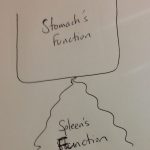
The Spleen and Stomach essentially function as a cooking pot on the stove model:

The Stomach receives the food, and the Spleen function is to digest it with its energy (represented by the fire below the pot). The Stomach is slightly hotter that the rest of our body (around 38 deg Celc).
The Stomach requires the Spleen’s energy to do it’s job of breaking up foods and sending them down the rest of the digestive tube to either be absorbed or eliminated as waste.
In CM, we say the Stomach/Spleen digestive combo  likes WARM, MOIST and COOKED and hates COLD, DRY, RAW. What we mean by hates and likes is that the warm, moist and cooked are easier to digest – they take up less energy so your body likes that.
Cold, dry and raw foods take up more energy (use up more of the Spleen’s power or function) so they can weaken it if you eat too much, or particularly if you already have a weak Spleen or weak body from something else (like your just getting over a surgery or severe illness or cold and flu where you sweated a lot) then your body overall might be weaker and more susceptible to the greater demand that eating COLD, DRY and RAW foods places on you.
Dampness happens when the spleen gets overwhelmed, and fails to do it’s job – that is “Transform and transport”. The Spleen function gets buggered up and overwhelmed by:
  • overeating – the stomach gets too full and there is no room to digest. too much food means overworking the Spleen and its gets tired and weak
  • Eating “hard to digest foods” – this is basically anything that requires more work to do, tires out the Spleen function. (raw, cold, heavily processed and dry foods are all good examples)
  • Eating whilst getting upset
  • eating whilst thinking too hard or doing mental activities – especially habits created where this is a regular occurrence.
  • Eating irregular meals – some too big, some too small, missing meals, then having one giant big meal etc.
Think of dampness like a muddy marsh. A sludge.
it’s like a fog or cloud in our body, it weighs down the limbs and muscles – your arms and legs feel heavy and sluggish when we are overwhelmed by dampness.
Cloudy thinking, muddle headedness, bloating, diarrhoea or loose stools and tiredness where you feel worse from doing things and especially heavy feeling in your body are all symptoms that can mean dampness is part of your CM diagnosis.
Some foods in CM are considered especially dampening. These are greasy, rich, sugary, creamy types of foods. Anything that is
Damp can come into our body from the environment too. In Australia we don’t see this as much because our climate is mostly dry. Living or working in damp places like a basement that’s damp, being in the pool or water a lot, working in a damp place where there is moist air can all cause symptoms of damp in the body that might be coming from the external environment rathe than an overstrain of your digestive functions (that would be called internal dampness).
IMPORTANT NOTICE: This information is provided in public interest of keeping people as healthy as possible. Common sense should always be applied. Too much of anything can be hazardous to health. This information is not intended as a substitute for medical advice or diagnosis by a health practitioner. If you have a health condition, you should check with your health care practitioner before using foods as medicine treatments, if you are in any way unsure about the suitability of the food agents, herbs or recipies for your body. In an medical emergency always contact emergency services, call 000 in Australia.
Chinese medicine organs and some words are capitalised to indicate they are different to the biomedical understanding of the organ. In Chinese medicine each organ represents the system of function according to ancient principals of understanding, including the channel system, spiritual, mental and physical functions. The traditional understanding of Chinese medicine organs is actually a functional system often encompass many now biomedically defined aspects such as lymphatic and endocrine (hormone) functions that are attributed to that organ. A lower case letter of an organ will indicate it’s reference to the biomedical organ. EG Kidney  (the Kidney functions of CM) and kidney (biomedical/physical kidney).
This article is written by Marie Hopkinson, the Chinese Herbalist & Acupuncturist at Metro Health and Medicine in North Perth. Marie is available for consultation by calling 1300 132 830 or email info@metrohealth.com.au
(C) Marie Hopkinson 2016 Reproduction permissible only with express permission of author.

Wednesday, November 16, 2016

Winter flu in spring? Why you get sick in the change of season

Why are flu’s and cold just as common, sometimes more common in spring as they are in winter? 

Why do we get winter colds in warmer weather like spring and summer? 

Chinese medicine has some answers.

As one season ends, another comes. Yin into yang, yang into yin.


While it’s normal around this time of year to rain periodically, its certainly alot colder than it should be for the end of the first month of spring.
The transition between hot and cold seasons is always variable.
The change of season time is when we are the most vulnerable to get sick with cold and flus. One reason could be because lessen our vigilance as the warmer weather approaches. The longer daylight hours, the warmer nights tell us spring is on it’s way and our body can loosen up a bit, which might then open the door to pathogens more easily.
Learn about how Chinese medicine views cold and flu’s in more detail here.
Tips to help lessen your risk of getting sick:
1. Wear a scarf – this will protect your neck from wind and cold invasion.
2. Wear lots of layered clothing. Getting caught out without enough clothes exposes your body to the cold environment. Layers means you won’t be overdressed and get too hot, but you can feel comfortable by not getting unnecessarily too cold either.
3. Have warm clothes ready – Resist the urge to wear lighter clothing just yet, and remember to bring your jacket if your day is likely to turn to evening.
4. Treat symptoms early – herbs and acupuncture are much more effective, and less treatment is needed, when you get to symptoms early on. Marie practices a style of Chinese herbal medicine that has specific formulas for various stages of the common cold and influenza. Even allowing time for rest and recovery instead of “soldiering on” at early stages can often lessen symptoms.
5. Careful when sweating
As spring actually approaches, its the time to do more exercise. Exercise opens our pores, allows sweating so if you’ve already started revving up your exercise and you do come out of the gym on a cold or wet evening (like tonight as I write this email) be extra careful not to expose your hot, wet (sweaty) skin to the environment. Have a shower and change clothes or ensure you have a jacket to protect you as you get to the car. Be careful of running around, getting hot and sweaty in the cold weather.
IMPORTANT NOTICE: This information is provided in public interest of keeping people as healthy as possible. Common sense should always be applied. Too much of anything can be hazardous to health. This information is not intended as a substitute for medical advice or diagnosis by a health practitioner. If you have a health condition, you should check with your health care practitioner before using foods as medicine treatments, if you are in any way unsure about the suitability of the food agents, herbs or recipies for your body. In an medical emergency always contact emergency services, call 000 in Australia.
Chinese medicine organs and some words are capitalised to indicate they are different to the biomedical understanding of the organ. In Chinese medicine each organ represents the system of function according to ancient principals of understanding, including the channel system, spiritual, mental and physical functions. The traditional understanding of Chinese medicine organs is actually a functional system often encompass many now biomedically defined aspects such as lymphatic and endocrine (hormone) functions that are attributed to that organ. A lower case letter of an organ will indicate it’s reference to the biomedical organ. EG Kidney  (the Kidney functions of CM) and kidney (biomedical/physical kidney).
This article is written by Marie Hopkinson, the Chinese Herbalist & Acupuncturist at Metro Health and Medicine in North Perth. Marie is available for consultation by calling 1300 132 830 or email info@metrohealth.com.au or http://www.metrohealth.com.au/new2/make-an-appointment/ 
(C) Marie Hopkinson 2016 Reproduction permissible only with express permission of author.

Thursday, November 10, 2016

Chinese Medicine's Study Stress Tips

Study Stress is normal when you've got end of year final exam time, assignments deadline looming...not to mention the normal life pressure like work, relationships, kids, family and health.
The good news is that Chinese Medicine can help you get through the end of semester season.
Herbalist and Acupuncturist Marie Hopkinson gives some study tips:
  • Study overworks the EARTH element according to Chinese Medicine (CM). The Earth element relates to digestion of food as well as thoughts.
  • Eating regular meals, even though things can be busy is a good idea in your study periond. Try to keep the "meals" smaller and lighter during the lunch time. Have a good breakfast, lighter lunch and a moderate dinner. making vege or vege/bone broth soup is a good way to have something pre-organised for lunch.
  • Nuts are a great snack for students. Nuts are high in protien as well as in Chinese Medicine they benefit the Earth element. The best nuts for study are roasted WALNUTS (looks like a little brain!) then roasted almonds, and then any other nuts other than cashews and peanuts.
  • Take light walks on your breaks. Moving around clears energy stagnation, gets blood flow to your limbs.
  • During exam time start each day with some kind of exercise in the morning.
  • The body and particularly the EARTH element likes regularity.
  • Mix up study time between sitting and standing, read more about the benefits of creating a standing work station here.
Scents for study:
Research shows 2 scents you should be aware of when committing things to memory  Cinnamon & Lavender, one study was done with 3 groups of people doing memory puzzles in rooms with room one - no smell, room two cinnamon and room three lavender essential oils. They found Cinnamon better than no smell, and lavender worse than no smell for memory recall.
Other studies show peppermint to be positively associated with memory. Read some of the research on odours and scents here.


Essential oils are a good way to use scent for study, as they are pure and you can regulate the scent volume yourself. At metro health, we have also made one of our fragrant earth incenses called MINDFUL that helps with memory and study - it's based on Cinnamon, aniseed and ginger (which is good for the Will-Power in Chinese medicine).
If you have trouble getting motivated, you might want to listen to marie's podcast on energy stagnation.
IMPORTANT NOTICE: This information is provided in public interest of keeping people as healthy as possible. Common sense should always be applied. Too much of anything can be hazardous to health. This information is not intended as a substitute for medical advice or diagnosis by a health practitioner. If you have a health condition, you should check with your health care practitioner before using foods as medicine treatments, if you are in any way unsure about the suitability of the food agents, herbs or recipies for your body. In an medical emergency always contact emergency services, call 000 in Australia.
Chinese medicine organs and some words are capitalised to indicate they are different to the biomedical understanding of the organ. In Chinese medicine each organ represents the system of function according to ancient principals of understanding, including the channel system, spiritual, mental and physical functions. The traditional understanding of Chinese medicine organs is actually a functional system often encompass many now biomedically defined aspects such as lymphatic and endocrine (hormone) functions that are attributed to that organ. A lower case letter of an organ will indicate it’s reference to the biomedical organ. EG Kidney  (the Kidney functions of CM) and kidney (biomedical/physical kidney).
This article is written by Marie Hopkinson, the Chinese Herbalist & Acupuncturist at Metro Health and Medicine in North Perth. Marie is available for consultation by calling 1300 132 830 or email info@metrohealth.com.au
(C) Marie Hopkinson 2016 Reproduction permissible only with express permission of author.

Thursday, August 20, 2015

How Can Chinese Medicine Help Me Live A Better Life?

Chinese medicine is founded on major prevention and health promoting principals:
  • It’s the practitioners job to keep you healthy, rather than just focus on the health problem you have now
  • Chinese medicine sees more inter-connections in the body than mainstream medicine (biomedicine or western medicine). A practitioner looks for how
  • Chinese medicine follows ancient wisdom from practitioners who are tried, tested and true…there is thousand years old literature which was just as useful back then as it has been in the centuries proceeding. Practitioners today have the benefit of centuries of clinical practice to see time and time again the outworking of acupuncture and herbal medicine formulas.
  • Chinese medicine promotes lifestyle and diet changes first, then use treatment (herbs and/or acupuncture)
Famous doctor from the Tang Dynasty, Sun Si Miao said “Dietary therapy should be the first step when one treats a disease. Only when this is unsuccessful should one try medicine”
Diet therapy is actually very easy to apply and it makes a lot of sense when you understand the why behind the what. Chinese medicine is based on observing our body’s interaction with nature and the enviornment we live in, so it is lodgical.
Marie’s practice centers around optimising patients health via diet and lifestyle. Increasing health by optimising your digestion helps you to recover quicker from illness (colds, flus and viruses etc), helps your body to perform at it’s best, promotes good mental health, helps you look better as you grow older and increase your stamina to last longer and be more resillent in stressful times.
As Hippocrates said “let food be thy medicine”

Monday, January 19, 2015

Beat the Heat


If you live in Australia, no doubt you know it’s summer. Where I am in Perth, it's been up to 44 degrees already! Did you know that the weather is significant in the cause of disease according to Chinese medicine? 

Heat is one of “6 Pathogens”, that can invade the body and cause disharmonies. Heat can commonly invade the channels of the neck, face and throat causing sore-throat, hayfever or seasonal allergies. Symptoms of heat include pain – usually severe or throbbing, as heat dries up fluids it can cause body fluids to congeal. For example phlegm will get thicker, yellow or sticky, urine can become more concentrated, darker and the tongue will get redder and more dry (as the moisture of the mouth can be dried up by Heat).

Heat clearing foods can be used as a preventative during the hot weather. Fruit & Veg that are watery and not too sweet like Watermelon, cucumber, lettuce are good at keeping away heat invasions. Drinking Chrysanthemum (Ju Hua) honeysuckle(Jin Yin Hua) and dandelion (Pu Gong Ying) herbs (by themselves or add to green tea) are more targeted ways to clear heat – especially from the face and throat.

Heat can invade not only via the environment but from our diet also. In Australia this weekend (26th January) we are coming up to Australia Day – a time of national celebration where the classic Aussie thing to do is to drink alcohol. Alcohol’s nature is essentially warm-hot, so combining lots of drinking with warm weather is a perfect environment to cause Heat-invasion disharmonies. Intoxication from drinking can cause what we refer to in Chinese medicine as “toxic heat”. 

Diarrhea, vomiting, breakouts of acne are all common hangover symptoms which essentially come from the self-induced toxic heat invasion. The simplest way to avoid this is to drink less! Space drinks out with water, use some self-control, and enjoy Australia day. If you do find yourself suffering the effects of a toxic-heat hangover Chinese medicine employs more “detox” methods to clear out the toxic heat. Our Tong Kuai Hangover tea is based on the idea of clearing toxic heat from the digestive system via the bowels. Watermelon is a good hangover food as well.    

Wednesday, October 15, 2014

Spring is Here!


To paraphrase from the Yellow Emperor, "Spring is the season where all living creatures grow"

Growth is a vital part of our lives, not just physically but mentally. The spring season brings warmpth that pushes our Yang Qi (Energy) from it's hybernative state of winter to the exterior of the body. The sun rises earlier and in the early days of spring you can feel the increasingly warmer early mornings...your body is teling you to get up earlier!

Spring is the best season to do new things.

Spring is associated with the Wood element according to the five elements theory. Wood is about growth, budding, regenration, new, creativity. The movement of this element is in a spreading direction - outwards, upwards and downwards (all directions).

It's easy to observe this inclination of growth and regeneration in nature. Flowers bloom, new seedlings sprout and animals are born in the spring season.  But what about in our bodies? Do you observe the inclination to grow, to learn, to do new things with the onset of spring?

Awareness is the first step. As you become aware of enviornmental prompts, allow your body and mind the time to explore the different lifestyle of the spring season.

Great things to do in spring are:
- Learn a musical instrument

- Take an art or dance class or workshop

- Go for a drive to the countryside, stop for a moment and take a walk in the bush.

- Get around sunrise and take a walk in your local park

- Eat regular, lightly cooked meals

- If you had a fully cooked diet in winter, you can start to add a few raw foods to your diet, like some fruit, or a salad with your cooked meats.


- Drink Chrysanthemum (Ju Hua) or Jasmine tea.

- Do any kind of exercise or increase the intensity of your exercise

- Sing

- Laugh

Spring is a good season to challenge ourselves to do new things mentally as well as getting physically active. If you live in Australia, we have Christmas around the corner, there is still time to embark on something new, read a book, change careers or make changes to our mental outlook before the new year hits us!


Seasonally, wind is a prevalent pathogen in spring which can often cause allergies, skin conditions and hayfever to be agrrivated. Chinese herbs, tea (check out our new Spring Tea below) and acupuncture can be effective treatments for these conditions. For appoiontments, please contact our clinic via our website www.metrohealth.com.au


Monday, September 8, 2014

Sugar Free September - tips for success

Before I even heard of #sugarfreeseptember, 4 weeks ago I went sugar free as part of returning to the Paleo diet. Depending on your health concerns, weight loss needs you can cut out just refined sugar through to anything of the overly sweet nature including things like honey.

Going sugar free can be tough in the first few days, but rest assured your body will thank you. After a week you shouldn't feel any where near as much craving for sugar, but many people return to it because of boredom, or lack of suitable alternatives.

In Chinese medicine, the sweet flavour easily overwhelmes the Spleen energy - the core of our body's energy-making machine. A small amount of sweet helps the Spleen - in the form of sweet vegitables or moderate amounts of grains the body can best benefit from the sweet flavour.

While Chinese medicine advocates cooked over raw foods, the following raw nutty recipie is definatley better than a chocolate bar or cupcake.

I love recipies that are quick to prepare, so over the next month, I'll share my personal favourites for your successful sugar-free September:

Tasty Nut Bars 

Your food processer or blender will become your best buddy in the kitchen, I like to keep a big box of a variety of nuts (all are good except cashews and peanuts), dried fruits and seeds (like sesame seeds, pepitas etc).

When you don't have time for reading recipies, just get a whole bunch of nuts and seeds and blend them down. Using a ratio of around 4:1, (nuts to dried fruit), add your favourite dired fruits to the blender. I like figs, seedless prunes, and a few apricots. If your not too concerned with loosing weight you can add a dash of some sugar-free sweet alternative like Dark Aglave Syrup, 100% pure Maple syrup or honey. when the mixture begins to "ball up" in the food processor then it's a good consistency.

For less sweet flavour, melt a few spoons of coconut oil and add that instead of the syrup options above.

Next, line a metal tin or plastic container with greeseproof paper and press the mixture into the tin, flattening it out.

For variety, each time you make the nut bars you can change up the kinds of nuts you use, or add some carob powder, cacao powder or cocoa powder.

Another option is to roll the mix into little balls and then roll in dried coconut.

Pop your nut bar into the fridge, after about an hour it's ready to cut up and eat.

Having these nut bars or balls in the fridge is a great sugar free snack alternative to chocolates and lollies. It's particularly handy in the first week of cutting out sugar when the cravings and habits are harder to break.  I like to cut mine up and put into zippy bags to take with me so I'm not tempted at work or on the run.

Good luck on your health journey this month with Sugar Free September!

Friday, July 11, 2014

Winter


Winter

Seasons are a major aspect of Chinese medicine, they influence the ways in which we should live, and the kinds of illnesses that are prevalent in the various seasons. Winter is the season where things retreat, hibernate and rejuvenate. Just as the weather becomes cold, and nature retreats, our lifestyle should also change to suit the climate. 

I took this photo on one of my trips to the tea village in Changsha
Wearing warm clothing, avoiding the wind and protecting the lower back (which is known as the “kidneys house”) is an important way to maintain health. Kidney energy relates specifically to winter via the Water Element. Water is reflected in tranquillity, stillness, rejuvenation and gestation. It’s the Kidney energy that is directly influential in reproduction and fertility. Water energy accumulates in hibernation and rest, this should be encouraged during Winter with longer sleep time (go to bed later and get up later), resting during the day by lying down flat after lunch for about 20 minutes, and sweating less by engaging in non-sweat producing exercises like stretching and gentle walking. 

Generally winter is the season where we don’t need to do much exercise. Certainly opening the pores during sweating creates an easy-access path for External Pathogens like Wind-Cold to invade and cause colds and flu’s.

The primary focus of winter is to allow the body to rest, sleep and recover from any cold and flu’s, and avoid exposure to External pathogens. For healthy people, winter should be a season of storing up the nourishing Post-natal Kidney Essence (Jing). 

Wednesday, May 14, 2014

Natures Pain Killers

Pain is a natural human experience, and it's not a pleasant one. As soon as we experience pain our next thought is "how can I stop it?"

In our search for some relief, why not turn to nature to try to alleviate some or all of the pain with natural relief? Essential oils, herbs, mental techniques, acupuncture and heat are all common and often cheap alternatives to drugs.

Before we delve into these natural solutions to treat pain, it's important to know the reason for the pain. Most of these natural alternatives are great for people who have already sought out medical help, and found there is either no "known cause" of the painful symptoms or the cause is untreatable and they are in a situation of managing the pain.

If the pain is acute (it just came on recently), it's something new, its getting worse and/or changing location to usual then it's important to seek medical advice. Visit your GP, registered professional health practitioner or go to the hospital if it's an emergency situation. In Australia we have a government health advice line you can ring and speak to a nurse who will assess if you need to go to emergency: 1800 022 222.

HEAT 

A great place to start to alleviate pain is heat. Heat makes blood vessels expand, getting more of the healing properties to the area you have heated up. Because too much blood with no movement can cause stagnation, it's best to use heat for 20 mins at a time, and follow up with some movement of the area or light massage around the area depending on the type of injury /pain you have.

MOXA

Moxa  is a type of herbal heat that is widely used in Chinese medicine. Moxa is a herb that has Blood moving properties, and is used by everyday people as well as practitioners to alleviate pain. In the clinic, you might see practitioners use moxa on acupuncture points with a stick or cones or even a moxa box. The wooden boxes are a great way to use the moxa at home for personal use. Tiger warmers - the metal stick device featured in the photo to the left, are a device designed to help people use the moxa stick on areas like the back, shoulders, limbs and abdomen to treat pain. We sell the tiger warmers and moxa boxes in our store, and our staff can assist you with help to learn how to use them.

Link to Moxa products on our Webstore just Below:
www.metrohealth.myshopify.com/moxa


ESSENTIAL OILS

Essential Oils are another favourite of mine for natural pain relief.

Frankincense, Clary Sage and Lavender is a good blend to soothe pain. Frankincense is a blood moving Chinese Herb - it's function is to move Blood stasis. Injuries will usually result in some degree of Blood stasis, so moving it will help speed up healing.

Frankincense and Clary Sage is great combination for period pain, back pain or pain from traumatic injuries. Lavender is soothing and is often used to help headaches. Apply directly or dilute and use with caution during pregnancy.

Heating Essential oils include Camphor, Menthol, Eucalyptus, Wintergreen - which are great for Arthritis or Joint pain (known or Cold/Damp Bi Zheng Syndrome in Chinese Medicine). Camphor and Menthol are common ingredients in well known "pain rubs" like tiger balm and deep heat. I once made a salt scrub using Wintergreen for a patient who suffered arthritis - in the shower they could scrub their body with the exfoliating scrub which left a soothing warming oily residue to moisturise and infuse the skin with the pain- reliving essential oils.


We have essential oils available in our Maylands Store and also online @ http://metrohealth.myshopify.com

MENTAL DISTRACTION

Finally, there is something great about mental distraction in managing chronic pain. You get what you foucs on...so if you have nothing else there but you and the pain, it will become worse due to it bieng your sole focus. Distract your mind by planning activities, watching a movie or TV, going for a walk if you can or even do a difficult puzzle or something else to take your mind off it.  Not all kinds of pain are suited to this method, but some pains, like period pain will actually benefit more from moving or standing than sitting and lying. Moving around might feel like the last thing you might feel like doing, however it's better to aid blood movement by standing and walking rather than sitting or lying down all day. Psychology, visualisation and hypnosis all contain powerful mind tools which experienced professionals can teach their clients how to better manage pain.

Of course, if pain gets worse, your symptoms change or your unsure of the cause you should see your Health Care Professional or go to the hospital in an urgent situation.

Tuesday, April 22, 2014

Lest We Forget

In Australia we are approaching ANZAC day on 25th April. This is a day of rememberance and thankfulness about those Australian soldiers fallen and those who gave their lives to serve in war times. ANZAC has always had a special meaning to our family, as my grandad, Eustace Mickle was a rat of Trobruk, in the past I have marched in rememberacnce of him, worn his medals and even been pushed in a pram by my mum and Anutie clipping the heels of the other ex-service men in the march!


Soldiers who fought for our freedom have brought us here, they fought for what we so easily enjoy now. For many of us our lives have been far from the fringe of war and we might not feel this on a personal level. Other people might have more influential in bringing us to where we are today.

Remembrance and reflection is a powerful thing for us as individuals and as a society. Why not use this ANZAC day as a chance to reflect on the sacrifice that people in your world, including the soldiers, who have brought you to where you are? How can we show our gratitude for the sacrifice?  

Because my blog is about Chinese medicine, I might mention that Chinese medicine considers refletion "Yi" to be part of the Spleen Energy. We digest thoughts as well as food through the Spleen's energy. Healthy digestion of thoughts such as creating time for rememberance
and reflection is part of a healthy person.